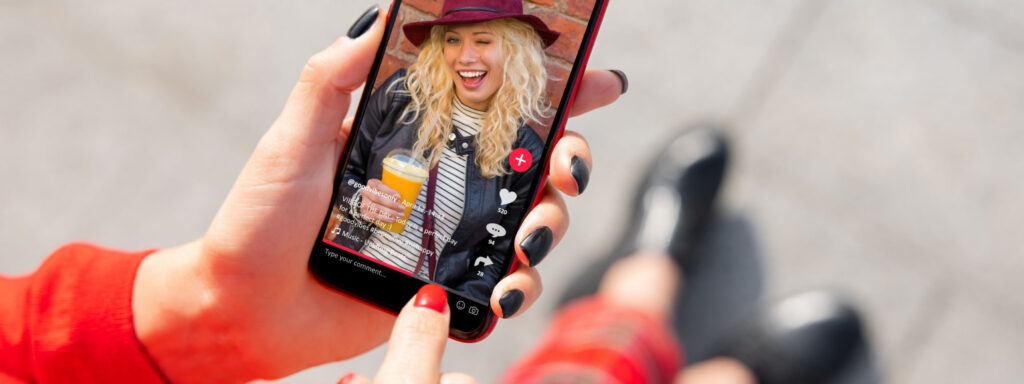
TikTok is no longer just a short-video social network. Today, the platform influences:
• Songs that become hits;
• Books that return to bestseller lists;
• Dances reproduced worldwide;
• Language trends;
• Behavior;
• Cultural consumption.
More than just an entertainment tool, TikTok has become one of the main spaces for cultural exchange today. And this raises an important question: is TikTok changing the way young people consume culture?
The answer appears to be yes — and perhaps on a larger scale than we imagine.
A new logic of cultural consumption
For decades, cultural consumption followed relatively predictable paths.
Movies used to be broadcast on television, music depended on radio, and artists needed large media outlets to reach their audience. With social media, this scenario has changed radically. On TikTok, any video can reach millions of people in a few hours, and this has profoundly altered the logic of cultural circulation. Today:
• Songs go viral even before they play on the radio;
• Books gain popularity through recommendations from content creators;
• Choreographies spread globally in a matter of days;
• Memes become everyday language.
Culture began to circulate at an accelerated pace.
The algorithm as a mediator of culture
One of the major transformations brought about by TikTok is in the role of the algorithm. The platform doesn't organize content solely based on followers; it uses recommendation systems capable of identifying interests, behavioral patterns, and attention spans.
In practice, this means that the algorithm has begun to act as a cultural mediator. It decides:
• Which songs will be listened to;
• Which artists will gain visibility;
• Which trends will be reproduced;
• Which speeches will reach more people.
Never before has technology had such an influence on everyday cultural consumption.
TikTok has changed music
Perhaps no sector has felt this impact as much as music. Today, songs lasting only a few seconds can determine an artist's global success, as specific excerpts are transformed into:
• Trends;
• Challenges;
• Choreographies;
• Memes.
In many cases, the public only knows fragments of the songs — but these fragments are already enough to drive billions of plays on digital platforms. This is even changing the music industry itself. Artists and record labels have started to think about songs already considering their potential for going viral on TikTok.
The return of books and reading
Interestingly, TikTok also helped boost something many believed to be in crisis: reading. Phenomena like "BookTok" transformed books into global successes, and young people began sharing literary recommendations, reactions to books, reviews, and reading lists.
Books published years ago have returned to bestseller lists thanks to the platform. This shows that digital culture doesn't necessarily replace other cultural forms—it can also reactivate them.
Fast-paced, fragmented, and accelerated culture
At the same time, TikTok also raises important concerns. The logic of short videos encourages the accelerated consumption of content, which at first may seem positive. However, this leads to excessive stimuli, reduced attention span, and fragmentation of information
Cultural experiences now happen in just a few seconds, influencing not only what we consume, but also how we think, interpret, and relate to the world.
The impact on language and behavior
TikTok also profoundly influences everyday language. Expressions, slang, songs, and forms of communication emerge and disappear rapidly.
As a result, the platform shapes aesthetic standards, behavioral trends, humor styles, and other modes of social interaction. Digital culture has become a central part of identity construction among young people.
Is TikTok culture?
This question generates debate.
For a long time, culture was associated only with traditional forms of art and knowledge, but authors such as Raymond Williams argue that culture also involves everyday practices, forms of communication, and ways of life.
In this sense, TikTok is a powerful cultural phenomenon, producing language, symbols, trends, and collective meanings. In this way, the app directly influences how millions of people perceive the world.
Democratization or concentration?
There is, however, an important contradiction. TikTok has broadened access to cultural production and has allowed anyone to create content and reach millions of users.
At the same time, the power of algorithms concentrates visibility on certain formats and patterns of behavior. This generates debates about:
• superficiality;
• hyperconsumption;
• aesthetic pressure;
• digital dependence;
• cultural standardization.
Contemporary digital culture is marked precisely by this tension.
Youth, creativity and new forms of expression
Social media has become one of the main forms of cultural expression for contemporary youth. Despite criticism, it's impossible to ignore the creative potential of these platforms. Today, thousands of young people use TikTok as a space to:
• Create art;
• Produce humor;
• Promote music;
• Discuss politics;
• Share knowledge;
• Build identity.
What does this reveal about our time? The success of TikTok shows that we are experiencing a profound transformation in the way culture circulates. Cultural experience has ceased to depend solely on traditional institutions and has begun to happen also (and mainly) on mobile phones, on social networks, via algorithms and short videos.
This changes cultural production, consumption, language, and social relations. More than a digital trend, it is a historical cultural shift.
🚀 Digital culture is also culture
Culture continues to exist — it just takes on new forms, languages, and spaces. Understanding platforms like TikTok is also understanding how new generations express themselves, create connections, build identity, and consume art and information
Conclusion
By transforming the mobile phone into a central space for cultural exchange, the platform reveals something important about our time: contemporary culture is fast-paced, connected, participatory, and profoundly digital. Understanding this is essential for comprehending new generations and the future of culture itself.
TikTok didn't just change the internet, it changed the way young people:
• They discover music;
• They consume information;
• They share experiences;
• They produce culture.
Frequently Asked Questions
Does TikTok influence culture?
Yes. The platform influences music, language, behavior, trends, and cultural consumption.
Has TikTok changed the music industry?
Yes. Many songs go viral on the platform first before reaching radio and streaming services.
What is digital culture?
It is the set of cultural practices mediated by technologies and digital environments.
Does TikTok affect the behavior of young people?
Yes. The platform influences language, habits, consumption, and forms of social interaction.
Can TikTok encourage reading and art?
Yes. Movements like BookTok have helped to popularize books and authors among young people.